
CEILING LIGHTS · BUYER GUIDE
How to Reduce Ceiling-Light SKUs
Use selectable colour temperature and wattage to fulfil more types of orders from one stock pool.
Imagine this stock situation: You have ceiling lights in the warehouse. But the 18W, 4000K version a customer wants is sold out, while another version is barely moving. Your total stock looks healthy; the mix does not match demand.
A ceiling light with selectable colour temperature and power can help. Instead of committing every unit to one setting when you place the purchase order, you can hold a common product and select the required settings before installation.
Why fixed settings multiply stock lines
A stock-keeping unit, or SKU, identifies a specific item you buy and manage. If you sell three fixed wattages, each in three fixed colour temperatures, the range can require nine separate stock lines.
12W / 18W / 24W · 3000K / 4000K / 6500K
Each line needs a purchasing decision, a stock balance and a replenishment plan. When those settings are independently selectable on one otherwise compatible product, the nine combinations can be supplied from one selectable model held under one SKU.
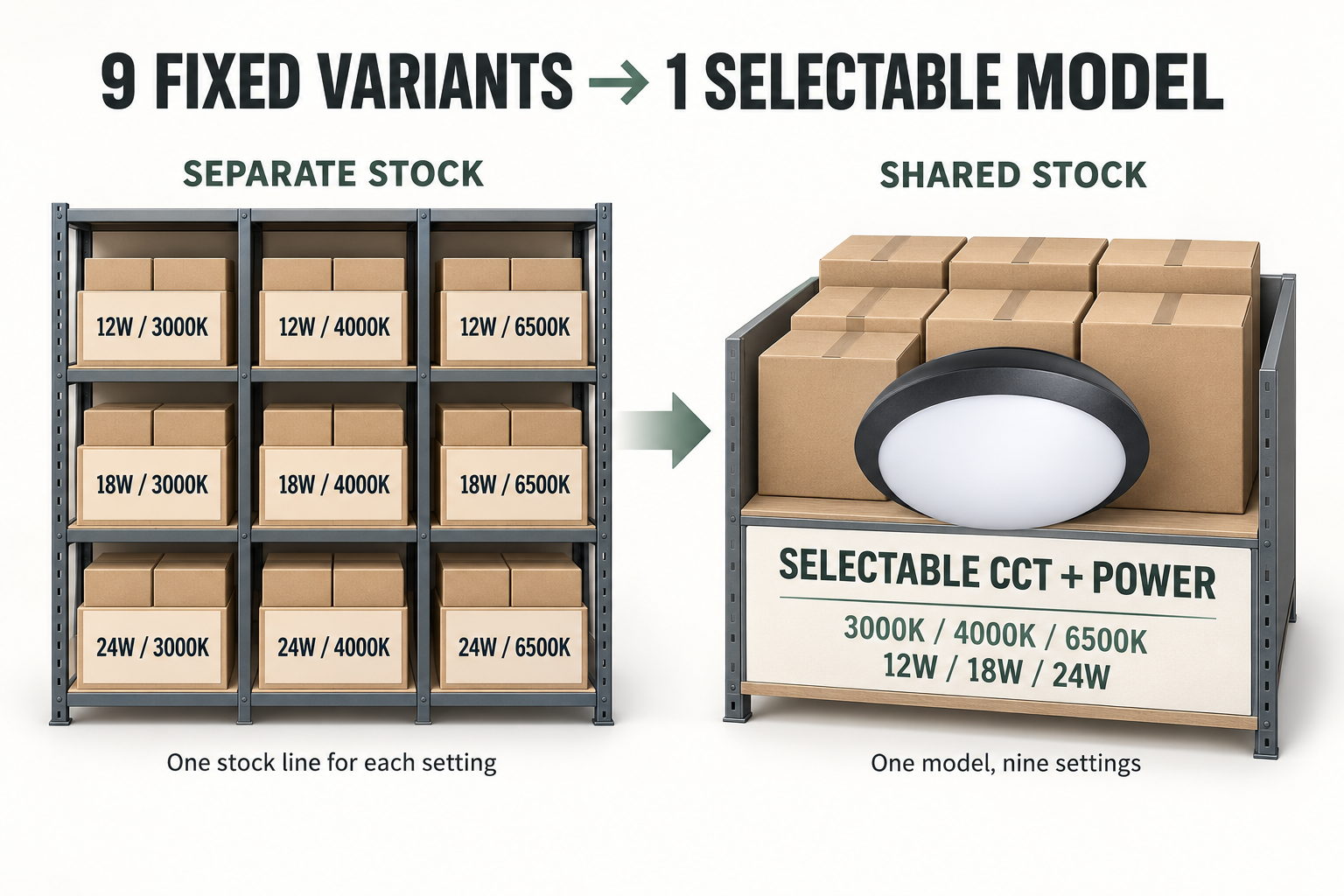
This works when the remaining requirements can stay the same: housing size, finish, voltage, control features, market requirements and packaging. A different finish or electrical specification may still need its own SKU.
One housing can cover several wattages
Consider a buyer whose existing range links each power rating to a different diameter:
| Power requirement | Example existing range | Selectable alternative |
|---|---|---|
| 12W | 180mm diameter | The shared housing, set to 12W |
| 18W | 220mm diameter | The shared housing, set to 18W |
| 24W | 280mm diameter | The shared housing, set to 24W |
These diameters illustrate an existing assortment, rather than a rule linking watts to size. If one housing suits the intended installations and its light output meets the requirements at each setting, the buyer can consolidate those power options into one physical model.
That can also simplify cartons, shelf labels and product listings. Keep a smaller model where its dimensions matter: a customer with limited ceiling space may still need it, even if a larger selectable light can provide the required output.
Two selectors keep the final choice open
The selectable GD-PCL01-285 LED configuration shown below uses two separate switches on the LED board. One selects 3000K, 4000K or 6500K; the other selects 12W, 18W or 24W. The same unit can therefore be prepared for any of the nine combinations.
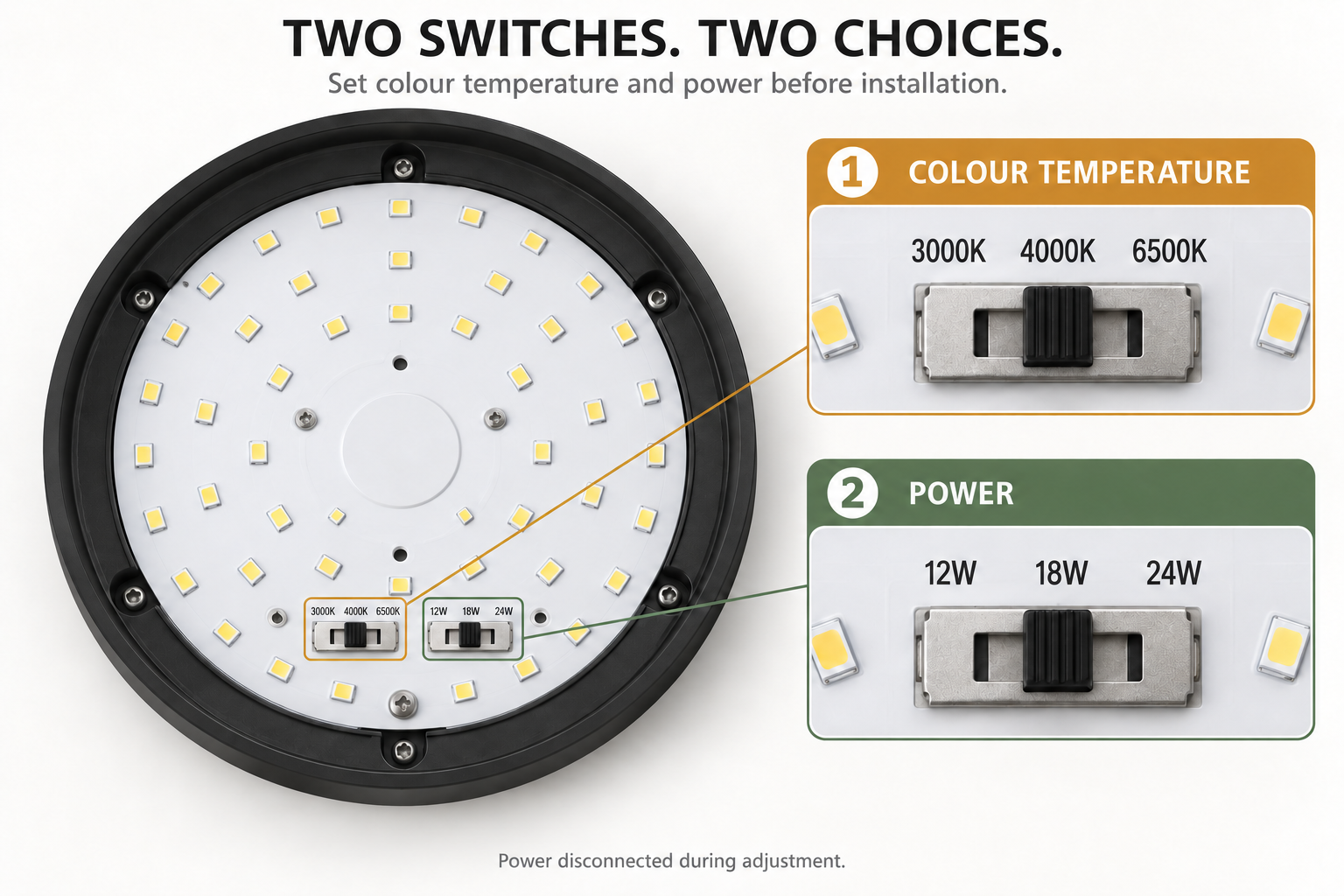
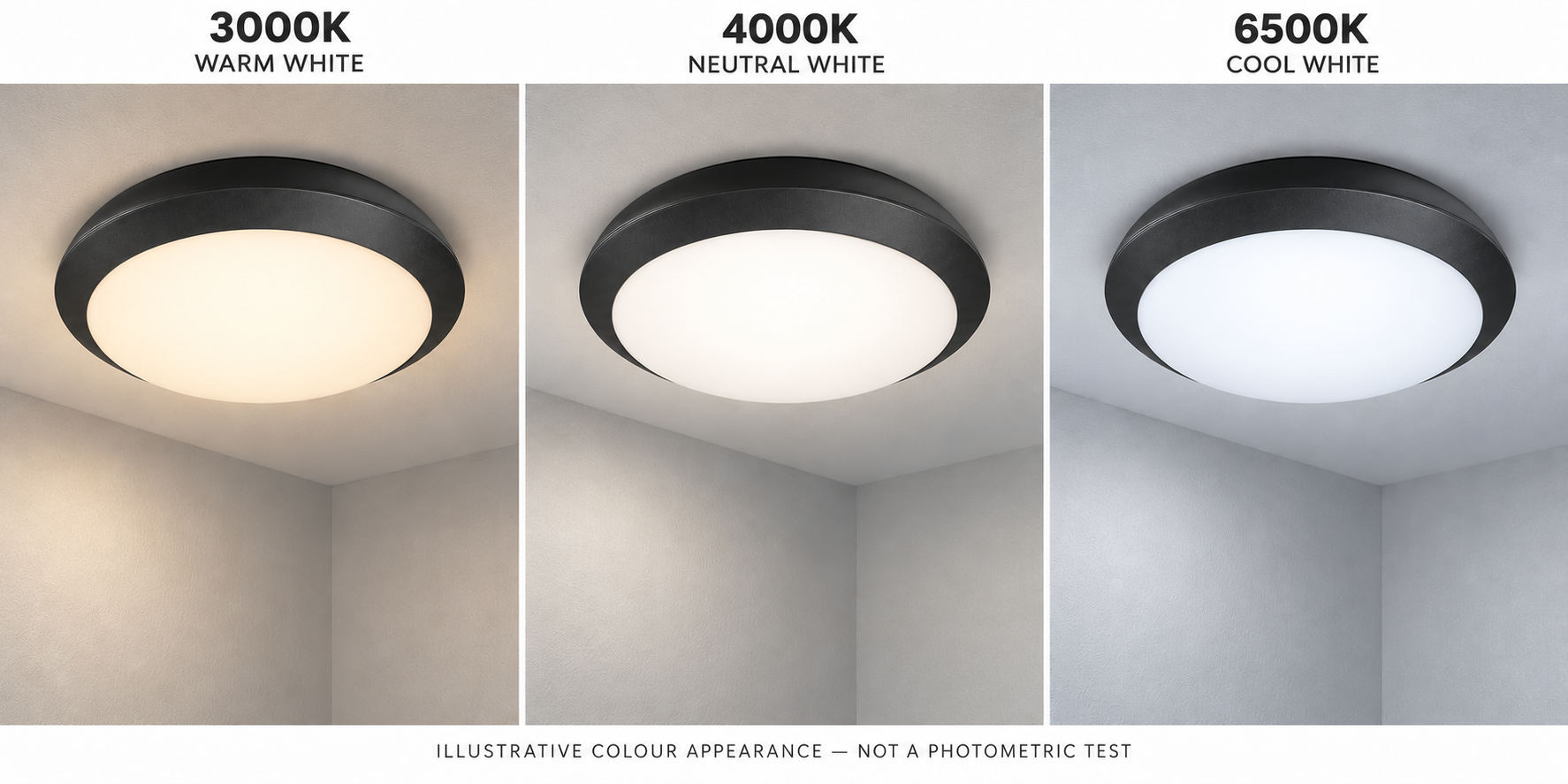
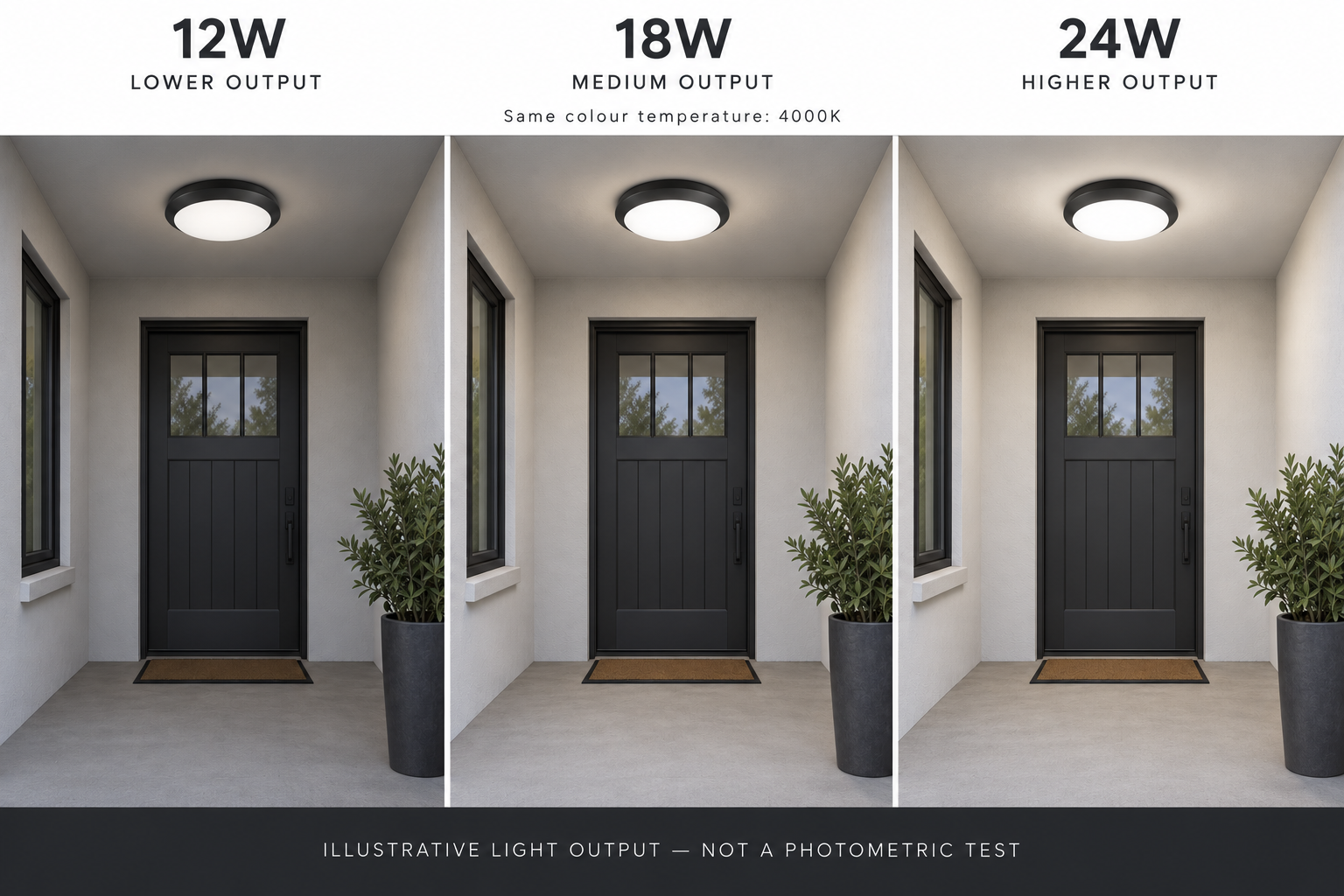
For your sales team, the settings become an easy way to explain the range. The colour-temperature selector changes the appearance of the white light. The power selector provides different output settings within the same housing.
Let the same stock answer different orders
Imagine a request for 12W warm white followed by an order for 24W cool white. With separate fixed versions, you need stock of both exact combinations. With a compatible selectable model, both orders can draw from the same available inventory.
You still supply one light for every light ordered. The benefit is that unallocated stock stays flexible: it can serve whichever supported combination sells next. This can reduce the risk of one setting becoming slow-moving stock while another runs short.
Keep the ordering and fulfilment process clear. Record the requested settings, agree who will select them, and state the factory default in the instructions. The installer should confirm the settings before installation, with power disconnected and following the product instructions.
How much stock should you carry?
Nine configurations becoming one SKU is a reduction in variety. The number of units you need still depends on demand, replenishment lead time and your delivery commitments. Shared stock may let you reduce separate safety buffers, but the saving should be calculated from your own sales and supply data.
Start with one ceiling-light family. Compare its current variants, sales, slow-moving balances and stockouts. Identify which variants the selectable version can actually replace, then set a replenishment target for the combined demand. Track both total stock value and order fulfilment after the change.
Include the quoted unit price and carton volume in that comparison. A small price increase may be worthwhile if the shared stock reduces tied-up capital and obsolete variants; the result depends on the range and its sales pattern.
Review the SKUs in your ceiling-light range
Send us the wattages, colour temperatures, dimensions and quantities you currently buy. We can compare them with the selectable GD-PCL01-285 configuration and identify which combinations could share one stock line.
Discuss your current stock range ↗Industry reference. Signify also identifies reduced customer stocking requirements as a benefit of selectable colour temperature and output in its Philips Dual Select range. Read the manufacturer’s explanation. This supports the inventory approach; it does not quantify savings for the model discussed here.