
MATERIALS & TESTING · BUYER GUIDE
Are Plastic Outdoor Lights Suitable for Coastal Areas?
Compare an exposed seafront wall with a sheltered entrance before choosing the housing, fixings and maintenance requirements.
Plastic housings can be useful near the sea because the body does not corrode like metal. But the screws and brackets may still be metal, and water can enter through a poorly sealed cable connection. Choose the complete fitting for its installation position.
Start with where the light will sit. A wall facing open sea needs a different discussion from an entrance under a deep canopy—even when the customer asks for the same style of light.
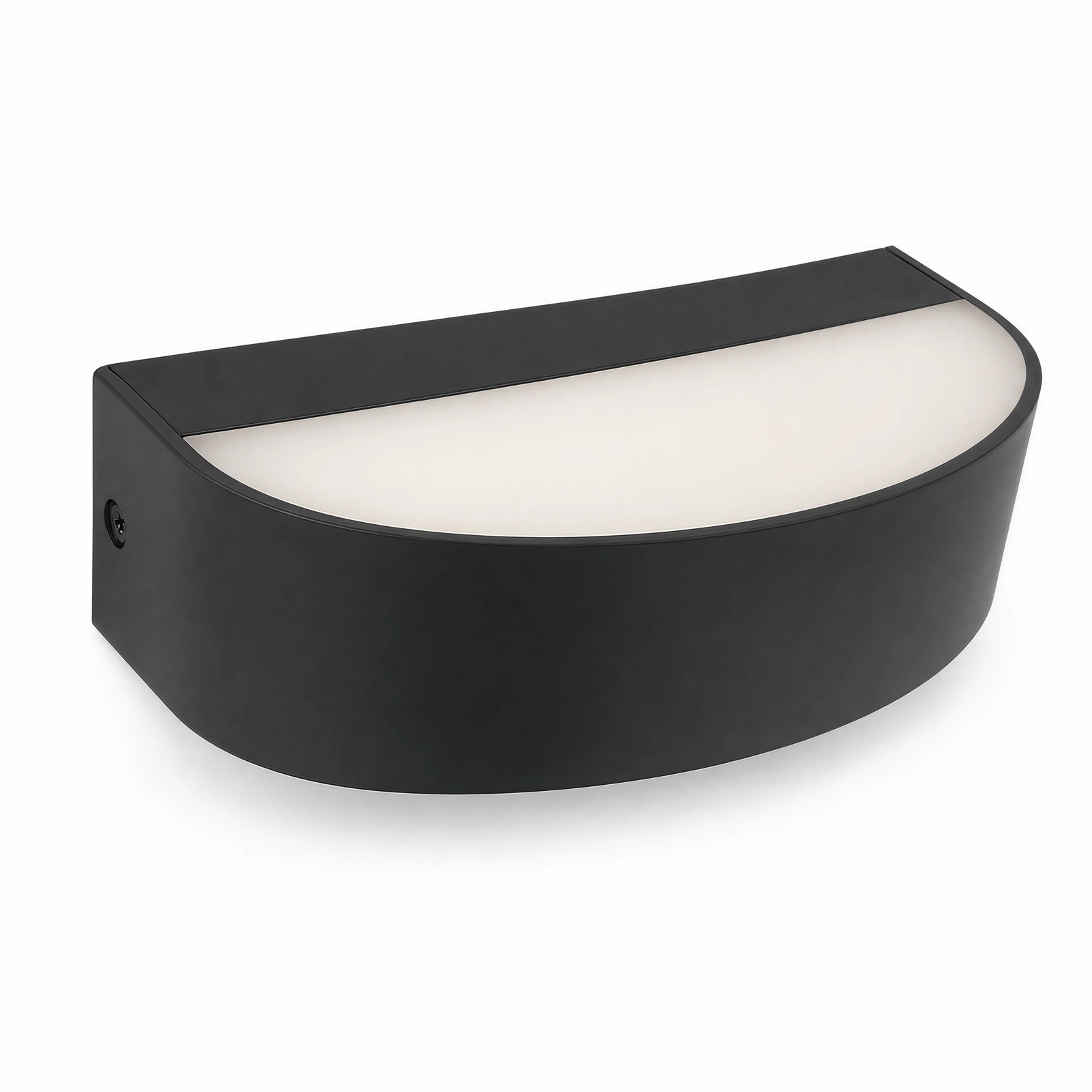
Why consider a plastic housing?
A plastic body avoids the metal-corrosion mechanism of an exposed metal body. This can be useful when selecting lights for salt-laden environments. It does not mean that every plastic formulation is suitable for prolonged outdoor exposure, or that the complete fitting contains no metal.
The housing material and its UV performance still matter. A body chosen to address corrosion should also be assessed for appearance and mechanical performance after weathering. Hengen’s existing laboratory video shows UV exposure, before-and-after sample comparisons and a subsequent impact-test sequence—evidence that addresses a different part of the outdoor-use question.
Look beyond the main housing
| Part or detail | What to establish before selection |
|---|---|
| Housing and diffuser | Material, colour, UV protection and the evidence for the proposed configuration. |
| Screws, brackets and exposed fittings | Which parts are metal, their specified material or finish, and their suitability for the exposure. |
| Seals and cable entries | Approved installation arrangement, sealing details and the relevant ingress-protection evidence. |
| Maintenance and warranty | Required cleaning, exposure restrictions, covered defects and the applicable warranty terms. |
Ask the supplier to identify the exposed screws and brackets on the proposed model. Check their material or finish and the supporting corrosion information. The word “plastic” in the product name does not describe those parts.
What salt-spray evidence can—and cannot—show
The short clip below shows Hengen’s salt-spray equipment. To assess a particular screw, bracket or fitting, you still need a record naming the tested item, exposure conditions, duration and result. The clip does not identify a model-specific corrosion outcome.
Salt-spray hours should not be read as a direct promise of years beside the sea. ASTM B117 cautions that stand-alone salt-spray results have seldom correlated with performance in natural environments. See ASTM’s published scope and significance.
Use the available result to assess the tested material or construction under the stated conditions. Where a supplier proposes a service-life claim, ask for the additional evidence and warranty scope supporting it.
Does a high IP rating solve the coastal question?
An IP rating describes specified enclosure protection, including against solid objects and water ingress. It does not by itself establish resistance to salt corrosion or UV ageing. Those require their own evidence. See the explanation of IP protection.
For example, a request for a coastal wall light should include the installation position, likely salt exposure and maintenance access, alongside the required IP performance. A distance from the shoreline can help describe the site, but should not be treated as a universal suitability threshold.
Two locations, two enquiry briefs
The following are hypothetical purchasing examples, not completed Hengen installations. Both may use a plastic-bodied light, but the questions to resolve are different.
| Example location | What to tell the supplier | What to check before selection |
|---|---|---|
| Wall facing open sea | The light is exposed to wind-driven rain and salt spray. Describe the mounting height and whether regular cleaning is practical. | Identify exposed metal fixings, their corrosion evidence, cable-entry sealing and permitted mounting orientation. Check any coastal restrictions in the warranty. |
| Entrance under a canopy | The canopy shelters the fitting from direct rain, but salt-laden air can still reach it. Show the position of the light and cable entry. | Confirm how much shelter the installation actually provides and which fixings remain exposed. Agree access for cleaning and replacement; do not assume shelter removes all salt exposure. |
Show us the installation position
Send a site photograph or sketch with the mounting position and any shelter marked. Include the model you are considering so we can check the available records and installation requirements.
Discuss a coastal installation ↗